 All services
 Local Moving
 Long-Distance Moving
 Commercial Moving
 Apartment Movers
 Piano Moving
 Packing & Storage
 Service areas
 How It Works
 Reviews
 About LD Movers
 Contact

Site assessment
Doorway widths, stair turns, and thresholds measured before the crew is sized and scheduled.
Pianos, safes, pool tables, and antiques moved with the right equipment and crew size rather than improvised on the day.
Specialty moving
A grand piano is not a heavy sofa. It needs a board, skids, straps, and a crew that has done it before.
Most piano damage happens because a crew tried to move it like furniture. An upright can weigh 500 pounds and a concert grand well over 1,000, with the weight distributed unevenly across a frame that does not tolerate being tipped.
We move grands on a piano board: the lid is closed and locked, legs and pedal lyre are removed and wrapped separately, the body is padded and strapped to the board, and the whole assembly moves on a skid. Uprights are wrapped, strapped, and moved upright on a dedicated dolly.
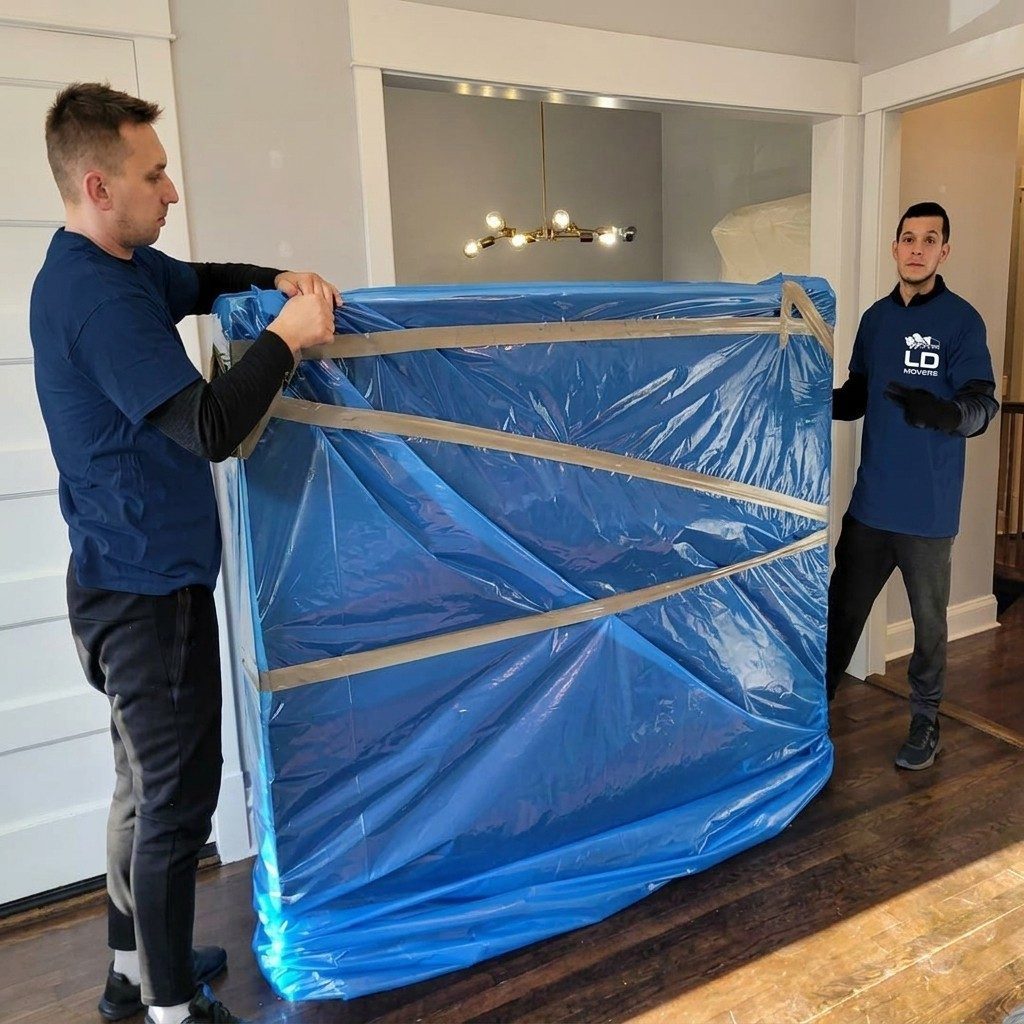
The same discipline applies to gun safes, pool tables, marble tops, and oversized artwork. Each gets a purpose-built plan, the right crew size, and crating when the item warrants it.
What is included
Doorway widths, stair turns, and thresholds measured before the crew is sized and scheduled.
Piano boards, skid boards, four-wheel dollies, stair-climbing equipment, and ratchet straps.
Quilted padding on every surface, with legs, lyres, and hardware removed and wrapped separately.
Three to five movers depending on instrument type, floor, and access - never a two-person guess.
Wooden crates for artwork, marble, and antiques that should not travel padded alone.
The item is set exactly where you want it and reassembled before the crew leaves.
How it works
Measured, planned, and crewed before anyone touches the instrument.
We collect the make, model, and type, then measure the route: doorways, stair turns, landings, and thresholds.
Equipment and crew size are set from the assessment. A grand down a turned staircase is not the same job as an upright on one level.
The lid is closed and locked, pedals and legs removed where applicable, and every surface is padded.
The instrument is strapped to a board or dolly and moved along the planned route with spotters at each turn.
It travels secured upright against the truck wall, isolated from other freight, with straps checked before departure.
Legs, lyre, and hardware are refitted, the instrument is positioned, and padding is removed on site.
Pricing
Specialty items are quoted individually because the drivers are physical rather than volumetric: instrument type, floor, stair turns, and whether a crane or hoist is required.
A piano moved as part of a larger household relocation is usually cheaper than a standalone booking, because the crew and truck are already scheduled.
Before move day
The difference between a smooth move and an expensive one is usually settled weeks before the truck arrives. Get the paperwork right, be honest about access, and confirm what is actually included in the price you were quoted.
Ask any mover for their USDOT number and verify it. A legitimate interstate carrier is registered with the Federal Motor Carrier Safety Administration, and you can look up their licensing and insurance status in a few minutes. Be cautious with any company that will not give you a written estimate, demands a large cash deposit up front, or refuses to survey your inventory before quoting a price.
Be specific about access at both ends. Stairs, elevator reservations, long carries from the truck to the door, low-clearance garages, and narrow streets all change the crew size and the hours required. An access detail you leave out is the single most common reason a job runs past its estimate.
Licensing and protection
Any company moving household goods across a state line is regulated by the Federal Motor Carrier Safety Administration and must hold an active USDOT number and operating authority. LD Movers holds both, carries cargo and liability coverage, and provides certificates of insurance for buildings that require one before move day.
Valuation is not the same thing as insurance, and the difference surprises people at claim time. Every interstate shipment includes released value protection at no charge, which pays 60 cents per pound per article. On a 40-pound flat-screen television that comes to $24 regardless of what you paid for it.
Full value protection is the alternative. Under it, the carrier is liable for the replacement value of a lost or damaged item, and repairs, replaces, or pays out accordingly. It costs more and usually carries a deductible option, and on a full household shipment it is almost always the right call. Your coordinator walks through both options before you sign anything.
Note any damage on the inventory sheet at delivery before the driver leaves - that document is the basis of a claim. You have nine months from delivery to file, and carriers must acknowledge a claim within 30 days and resolve it within 120. We would rather fix a problem than argue about one, and our claims contact is the same coordinator you have worked with from the start.
Choosing a mover
Searching for movers near me returns a mix of licensed carriers, brokers who resell your job, and outright scams. A few checks separate them quickly.
LD Movers is licensed and insured for interstate household moves, holds a 4.9-star average across 212 verified reviews, and quotes from a real inventory every time. You will speak to the same coordinator from estimate through delivery.
FAQ
Yes. Grands move on a piano board with the legs and lyre removed and wrapped separately, handled by a crew sized to the instrument and the route.
Almost certainly. Any change in position, temperature, or humidity affects tuning. Wait two to four weeks after delivery so the instrument settles first.
In most cases yes, after we measure the turns and landings. Where a staircase genuinely will not take it, we will tell you before booking rather than on the day.
Yes. Safes, pool tables, marble tops, and oversized artwork are handled by the same specialty crews with equipment sized to the item.
Released value protection is included at no charge. Full value protection is strongly recommended for instruments and is quoted on request.
Related services
One coordinator handles every service on your move, so you are not managing multiple vendors when dates or access rules change.
Same-metro moves billed hourly with crews, truck, and materials included.
Interstate relocations to all 50 states priced by weight and distance.
Business relocations scheduled around your operating hours.
Walk-ups, high-rises, elevator windows, and building paperwork.
Corporate moves with floor-plan labeling and workstation rebuild.
Full or partial packing plus secure short and long-term storage.
Ready to move?
Tell us about your upcoming move. A senior moving advisor responds within 24 hours with clear pricing and next steps.